A multisensory soil exhibition · World Soil Museum, Wageningen

Unseen

The World of Soil ↓

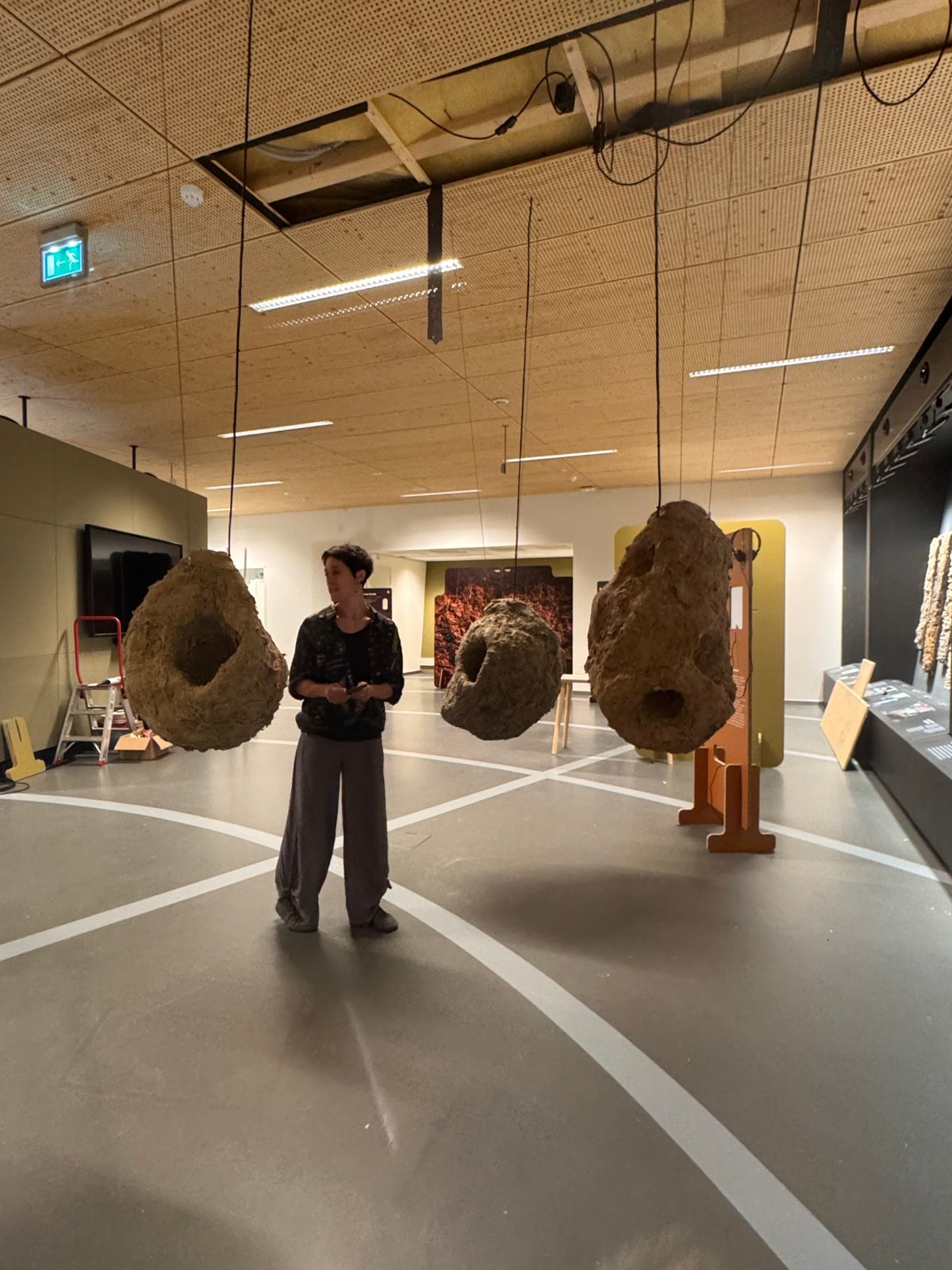
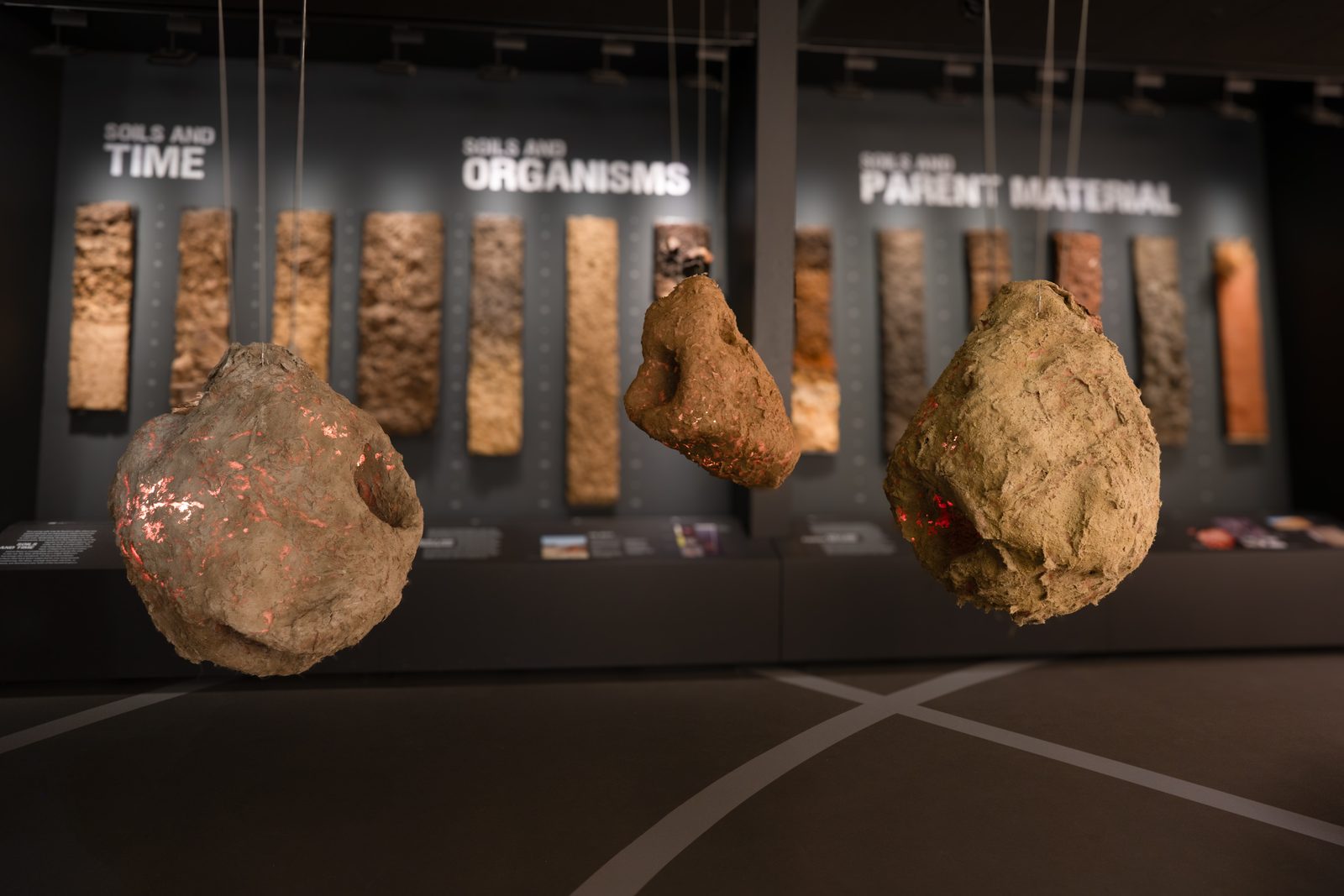
Three hanging clay forms by Poppy Flint in front of the soil monoliths of the World Soil Museum
In the Spaces, the Stories by Poppy Flint, in the World Soil Museum

How can we experience something that usually escapes our perception?

Soil is essential to life, yet much of what makes it alive remains hidden beneath the surface, beyond our everyday senses. While science allows us to observe these invisible processes, UNSEEN. The World of Soil begins from a different perspective: experience.

Art and science converge to make perceptible what usually escapes human experience. Together, they invite us to see soil not simply as the ground beneath our feet, but as one of Earth's most complex, dynamic and vital living worlds.

Taste

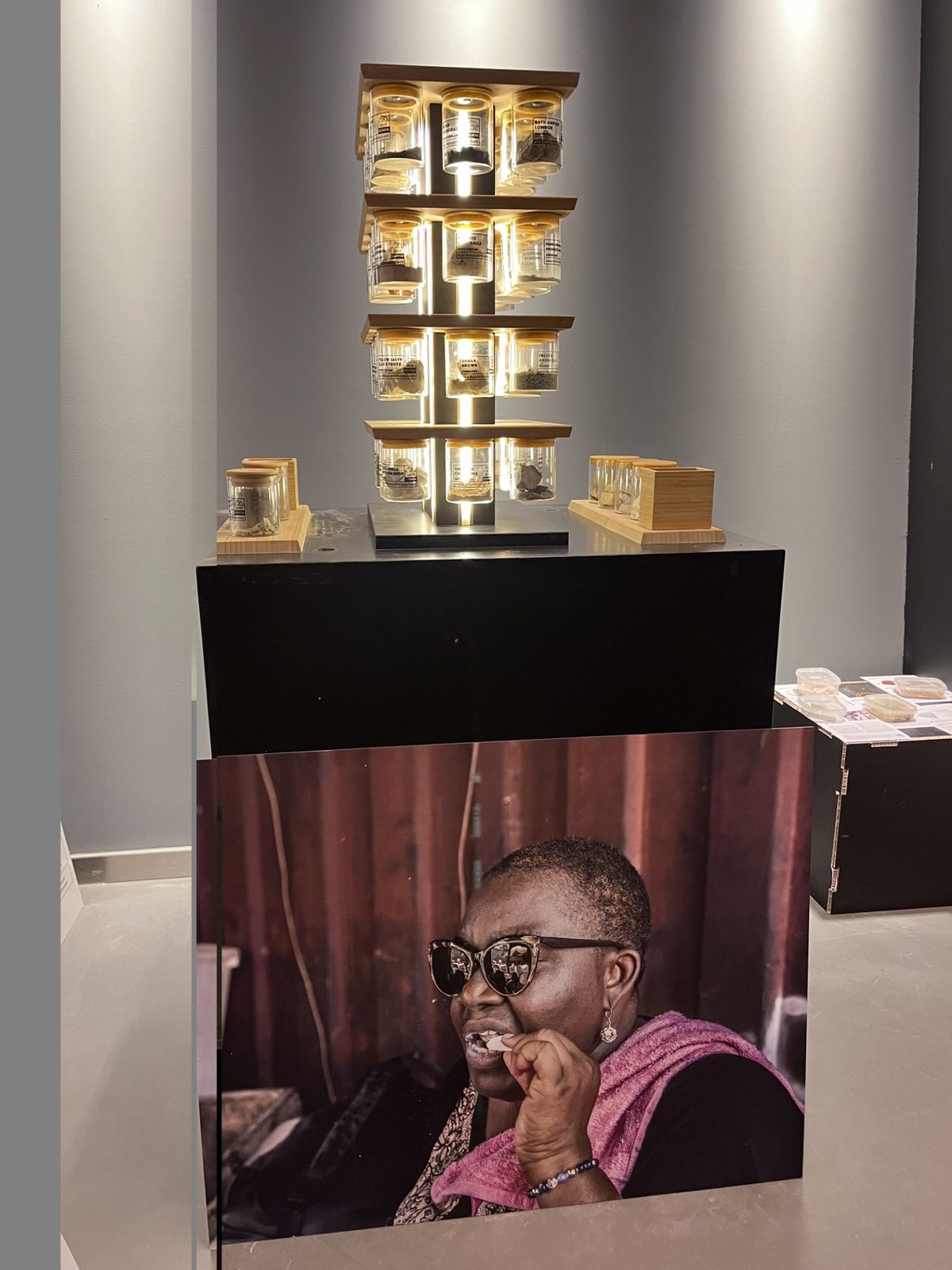
Eating transforms soil into culture

Museum of Edible Earth

Dr. masharu · 2025

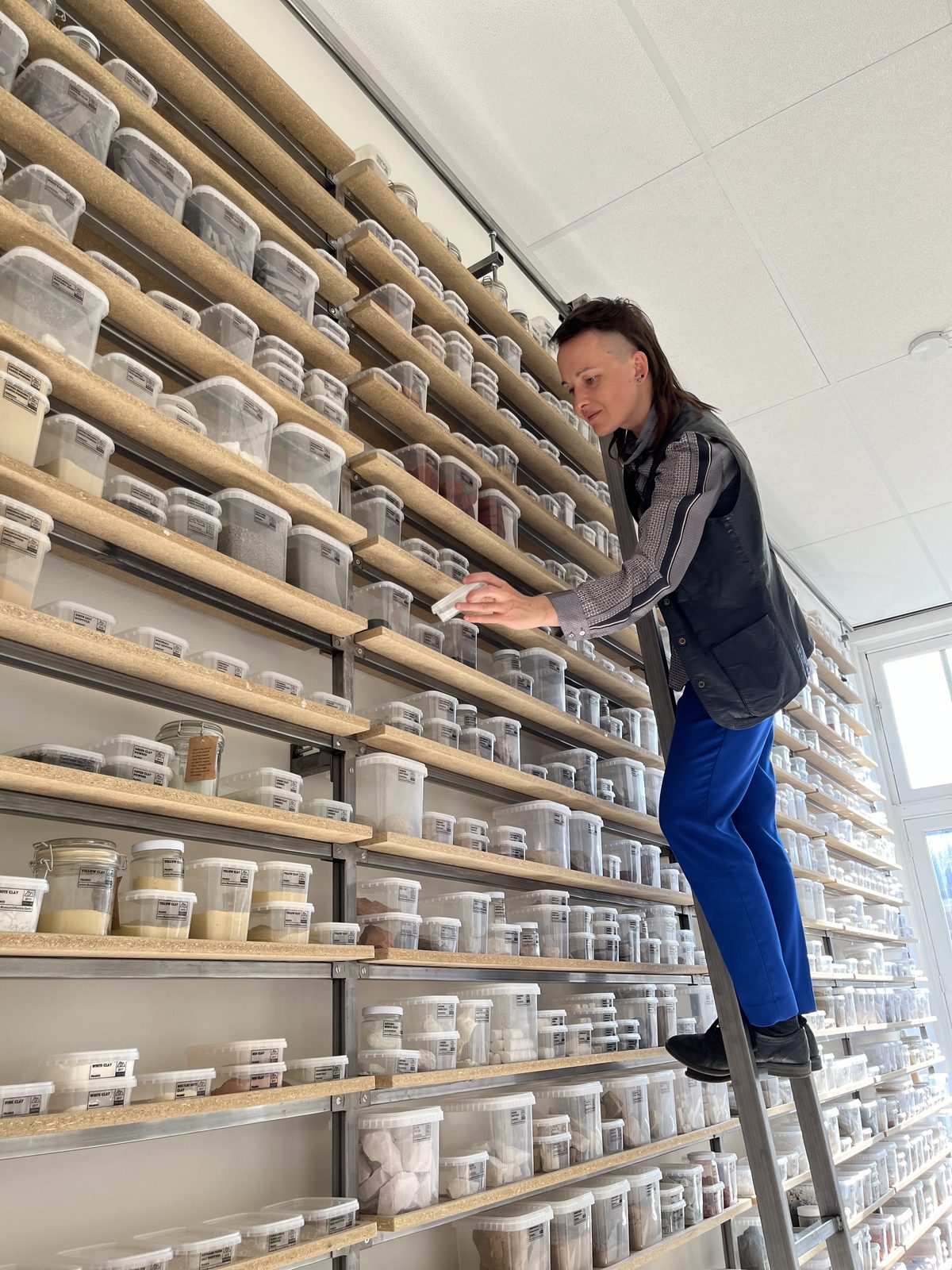
Soil nourishes life in ways we readily recognise through agriculture. Less familiar is the fact that, in many parts of the world, soil itself has been intentionally consumed for centuries. Museum of Edible Earth brings together edible soils collected from different cultures, tracing the practice of geophagy across histories, beliefs and traditions. Presented as a contemporary cabinet of curiosities, the work invites visitors to look beyond scientific classifications and encounter soil as a material deeply embedded in human experience.

Explore the Museum of Edible Earth

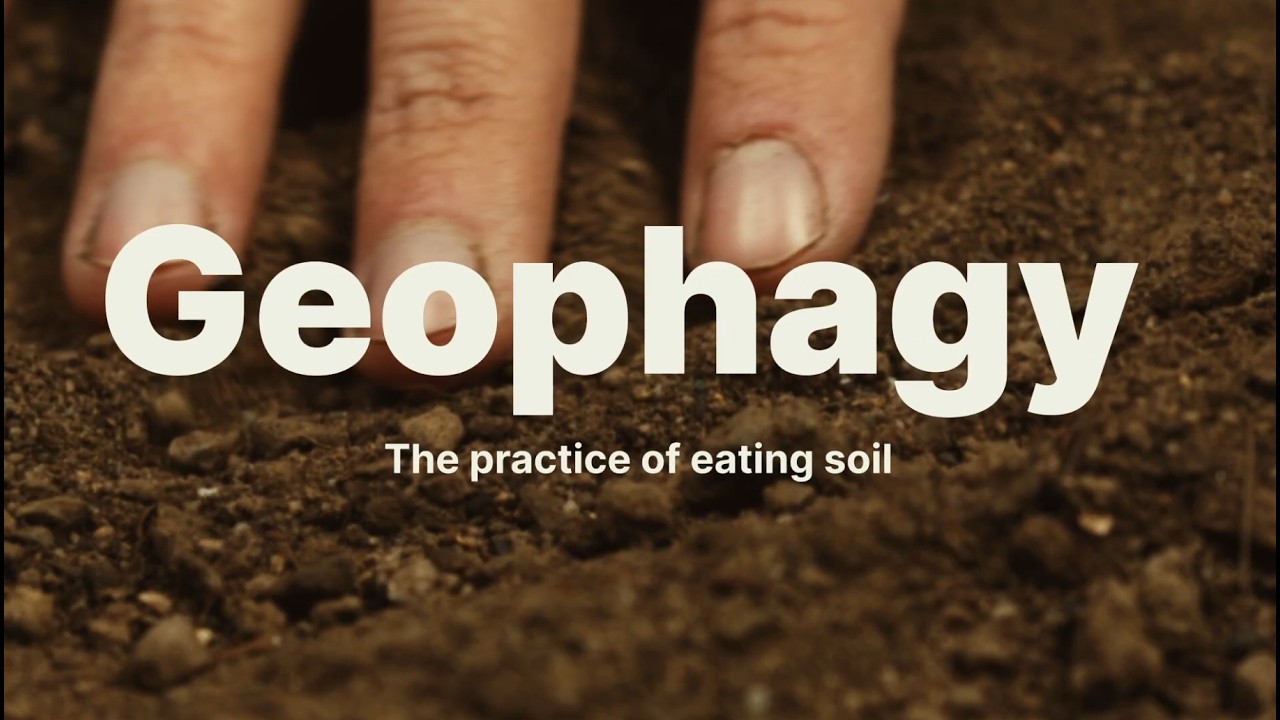
Geophagy: the practice of eating soil

A taste of Earth. Soils around the world taste as different as the landscapes they come from. Each sample's flavour reflects its geology, climate, and region of origin.

What is geophagy? The deliberate eating of soil, clay or chalk practiced across many cultures for nourishment, ritual, beliefs, and medicine.

100 mg of soil. Adults ingest around 100 mg of soil per day through unwashed vegetables, root crops, and food grown close to the ground.

Why it matters. Crops take up contaminants, such as heavy metals, PFAS and microplastics, in the same way they take up nutrients. Such components can ultimately end up on your plate.

Video still: Geophagy: the practice of eating soil Play video
95%of our food comes from soil. The minerals you taste travel up through crops into everything we eat.
TerroirIn wine and cheese: the soil's mineral and microbial character shapes the flavour of what grows in it.

Hear

Listening reveals what sight cannot

Change Factors

Marcus Maeder · 2026

With Jungbach/Reto Jung (construction), Manu Meier (sound processing)

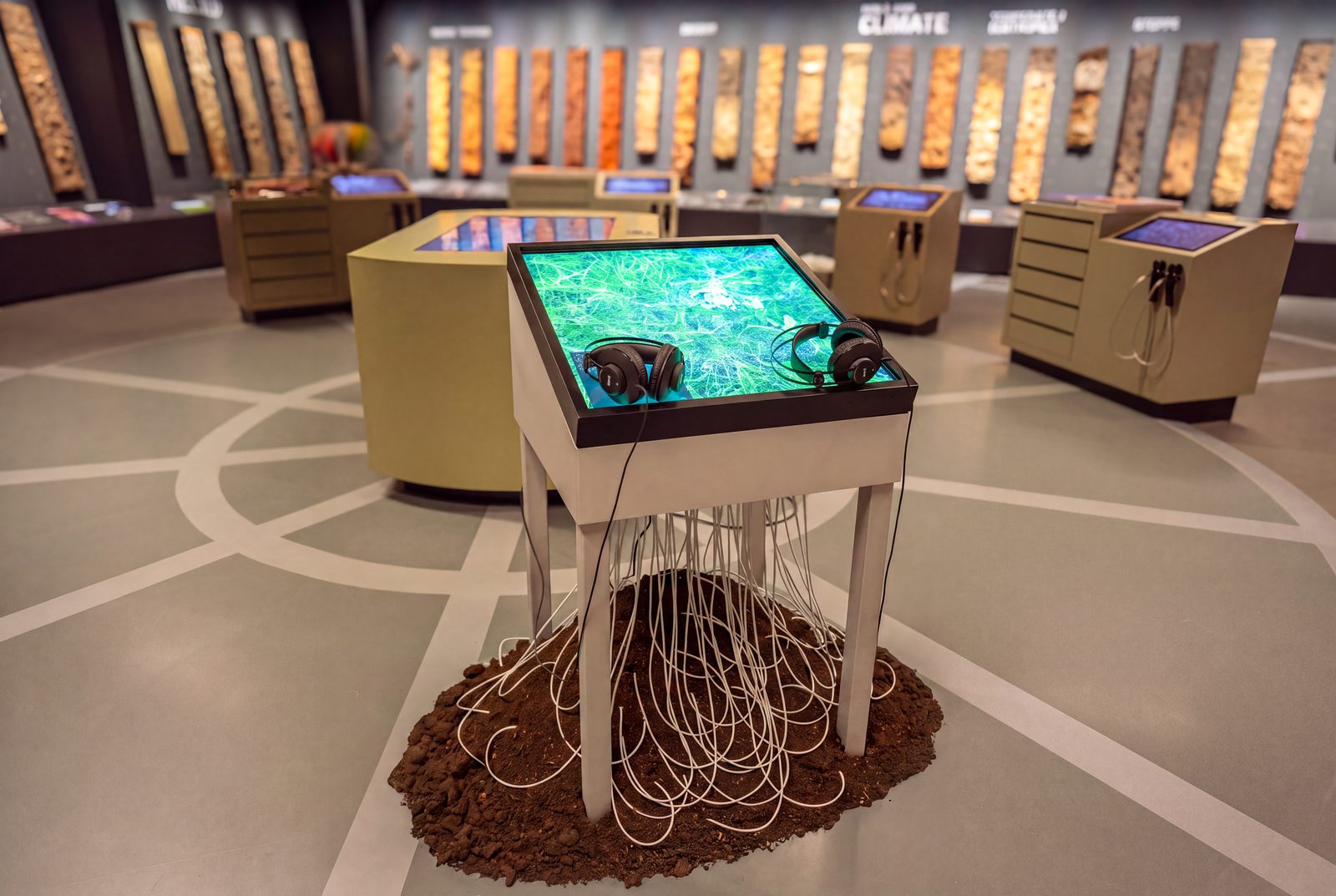
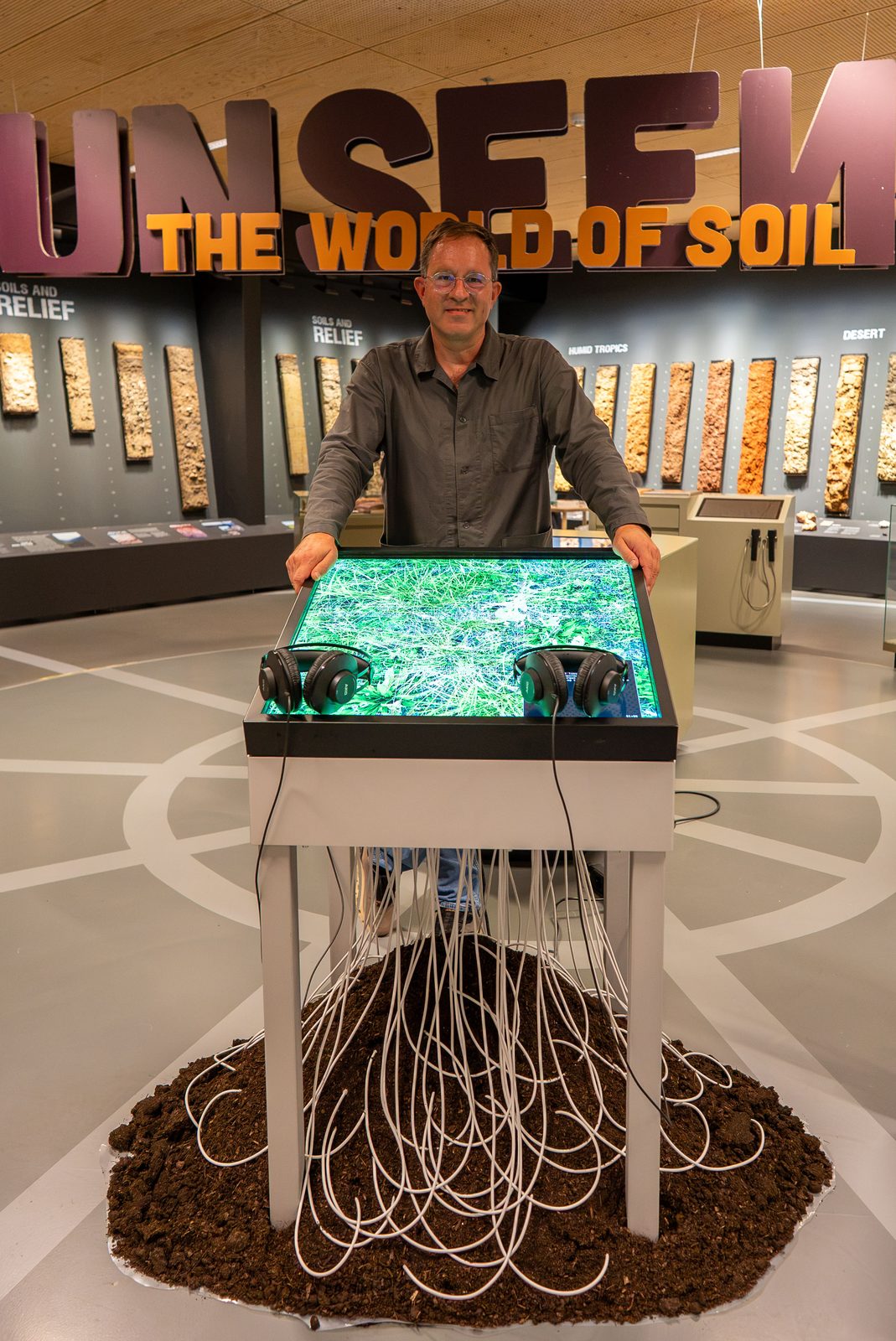
How does climate change sound beneath our feet? Change Factors draws on recordings made during the Global Change Factors Experiment, a long-term scientific study investigating how environmental pressures such as drought, salinisation and rising temperatures reshape soil ecosystems. Instead of presenting these changes through graphs or data, the installation invites us to hear them as they unfold within the hidden acoustic world beneath our feet.

The Sound of Soil

Every soil has a voice. Each ecosystem sounds different because every organism living in soil generates movement, and movement generates sound. The richer the community below, the more complex the soundscape.

The sound of nutrient cycling. Every sound you hear is an organism at work. Earthworms burrowing create channels that give space to air, water and roots. Mycorrhizal fungi extend through soil to deliver water and nutrients to plant roots. Decomposers break down organic matter into the minerals that feed crops. Listening to soil is listening to the processes that keep us alive.

Video still: The Sound of Soil Play video
1 teaspoonof soil holds more living organisms than there are people on Earth.

Smell

Can you guess what you smell?

Smelling Soil

That fresh smell after rain has a name: petrichor. After a dry spell, rain releases geosmin, a compound made by soil microbes, often mixed with plant oils.

Our noses are extremely sensitive to geosmin. It gives beetroot, mushrooms, carp and some wines their earthy taste, and makes drinking water taste musty, even though it is harmless.

In the exhibition you can smell:

  • Petrichor, the fresh scent of rain on dry soil
  • Vetiver, the smell of grass roots
  • Forest soil, the smell of a foggy forest floor
  • Earth, a deep mineral and earthy smell
Video still: Smelling Soil Play video
<100 pptWe can detect geosmin at less than 100 parts per trillion.

Touch

Life depends on what lies in between

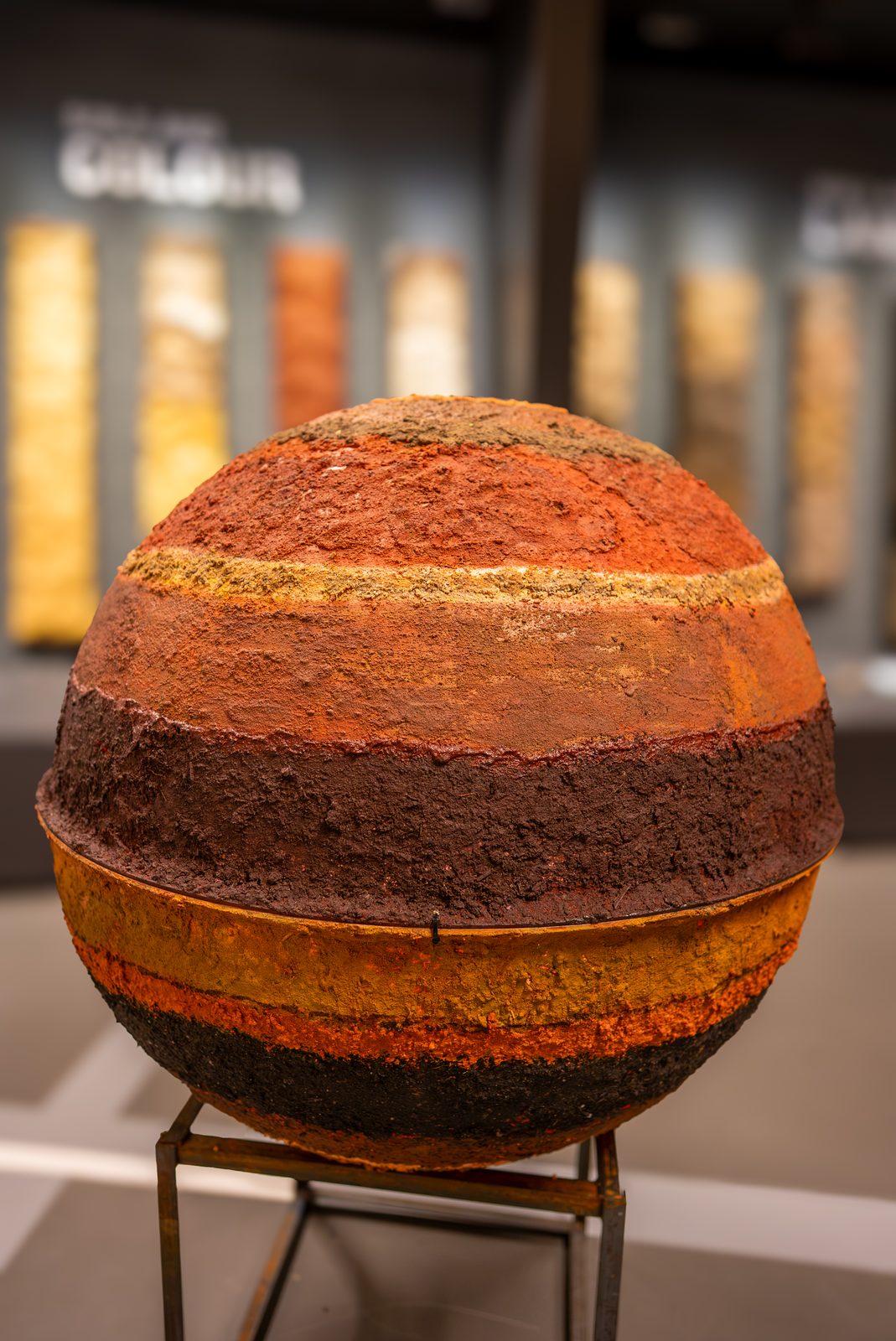
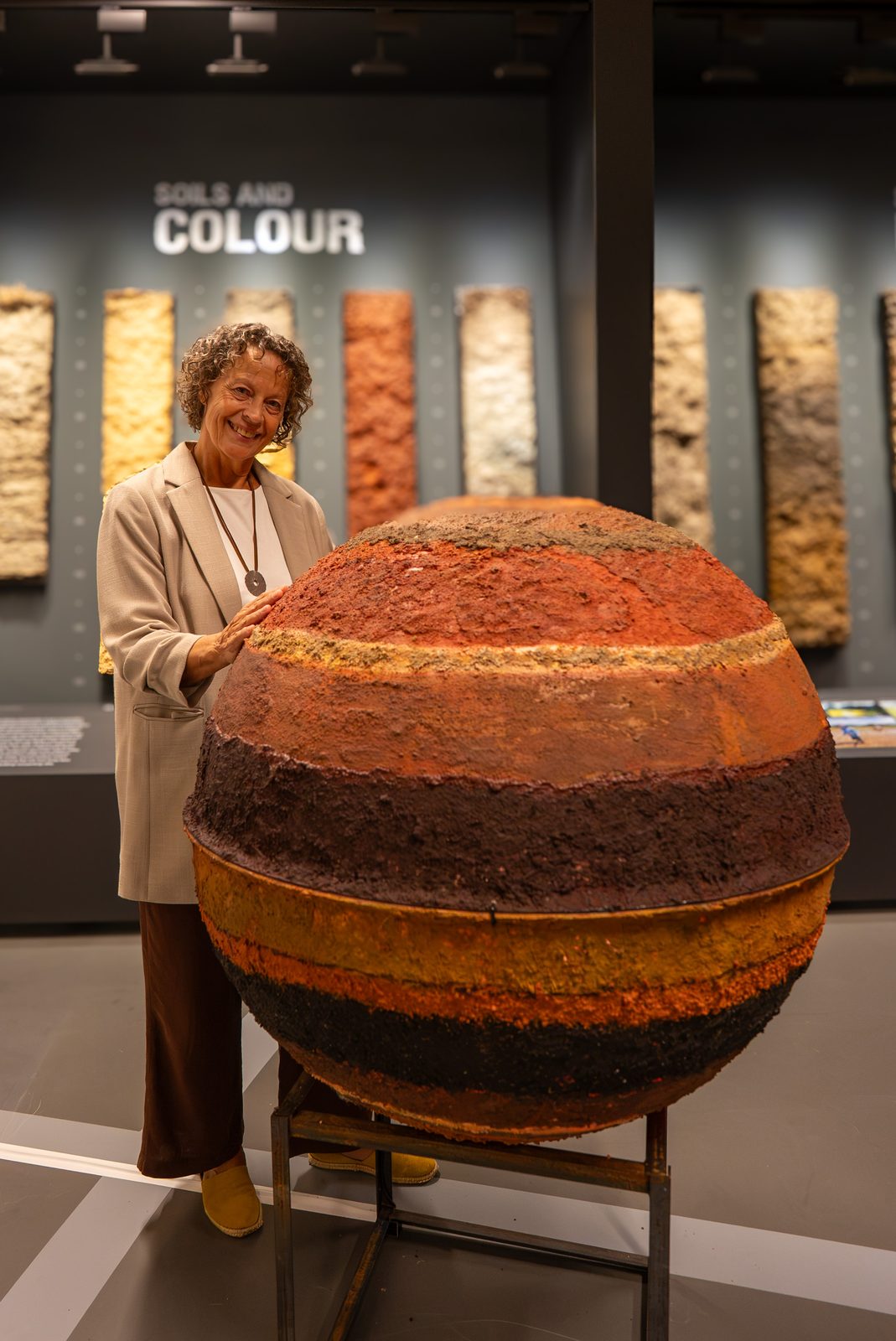
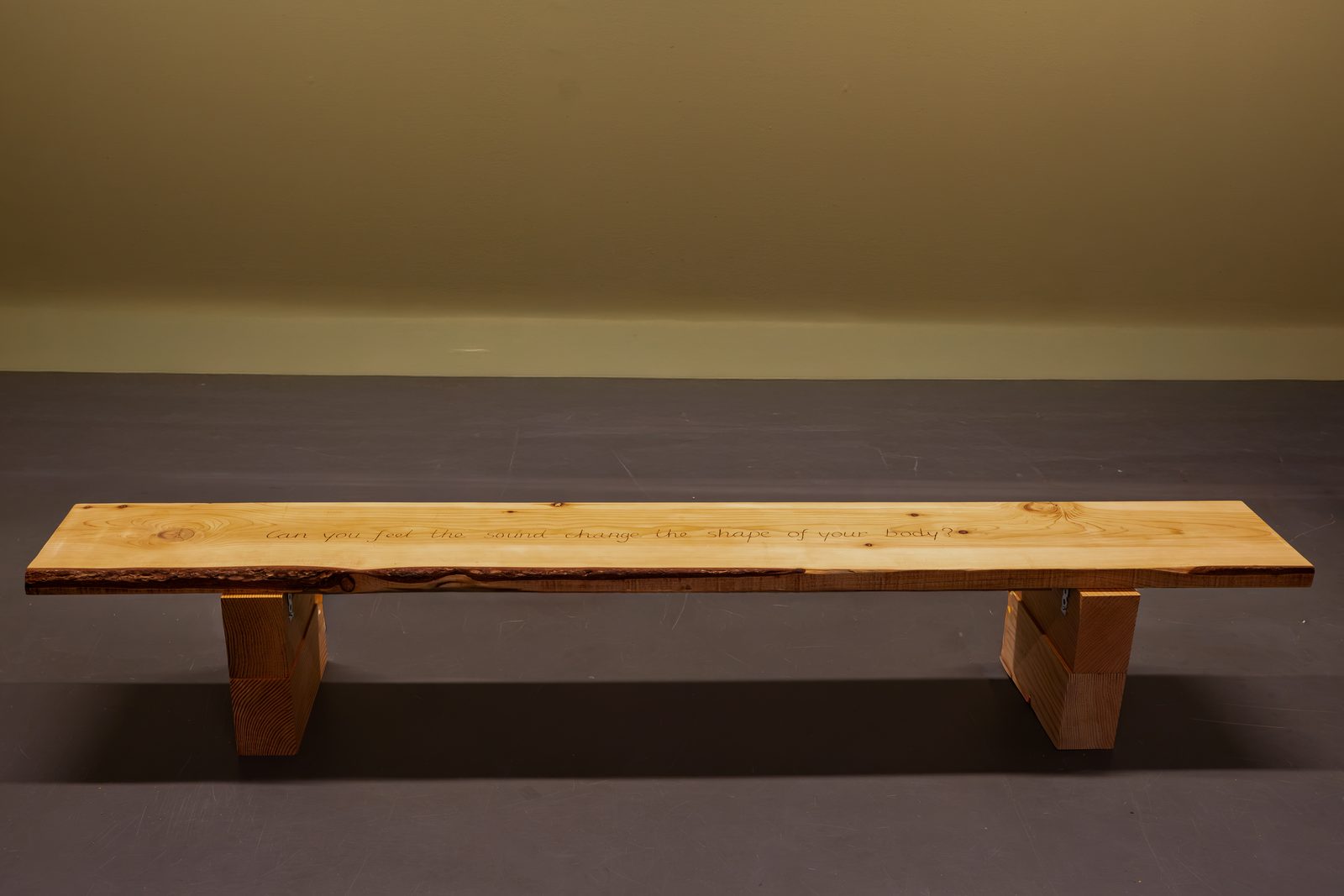
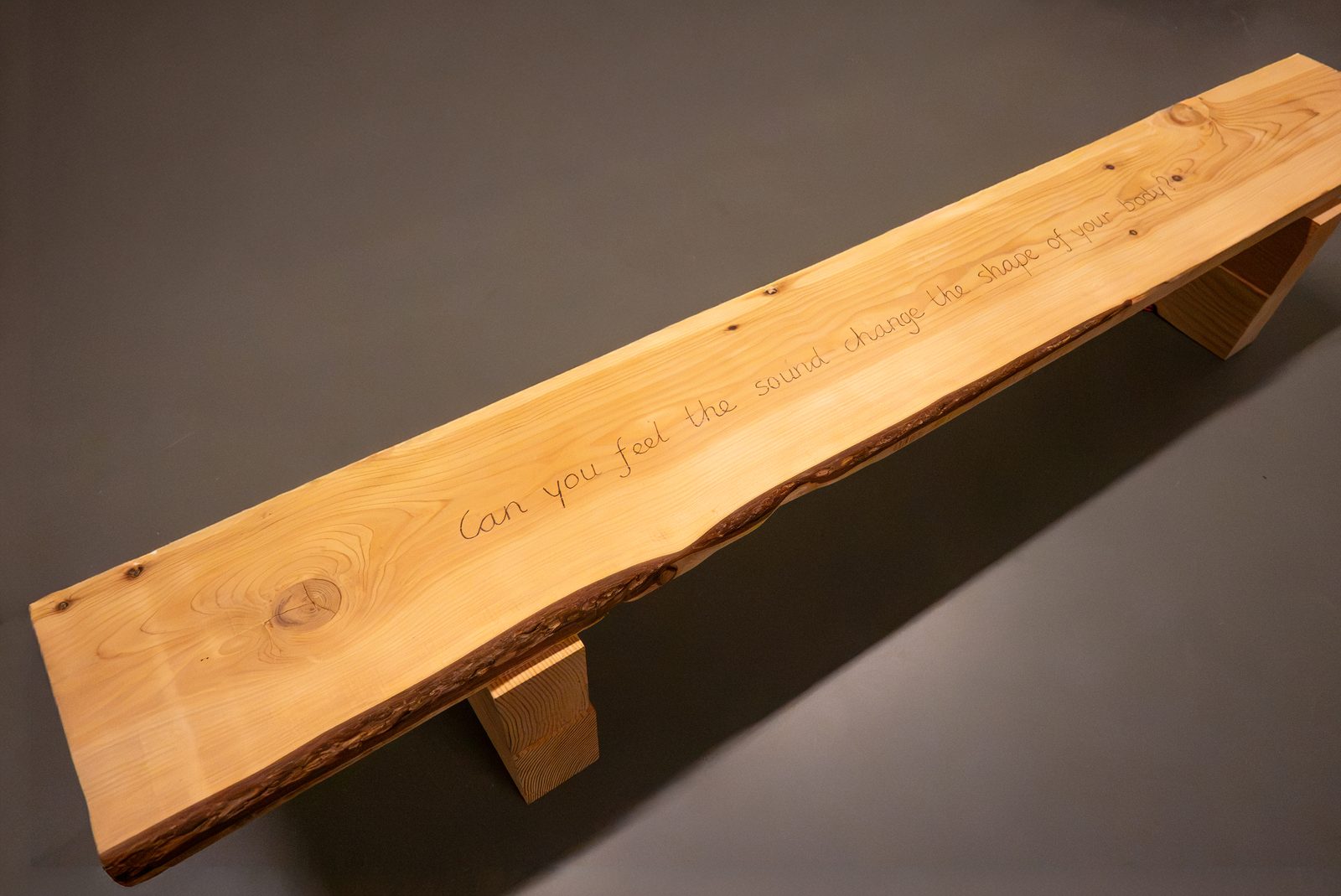
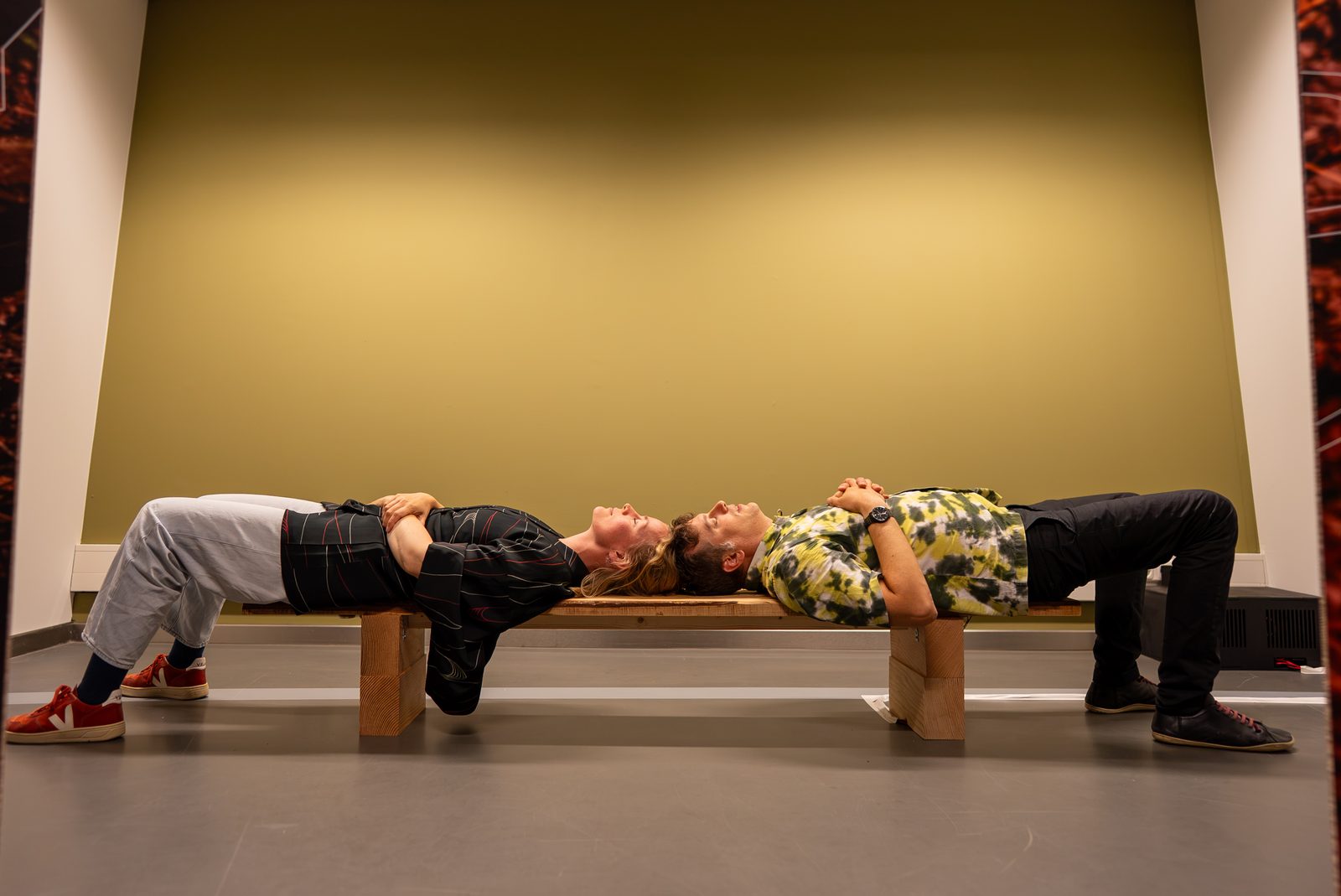
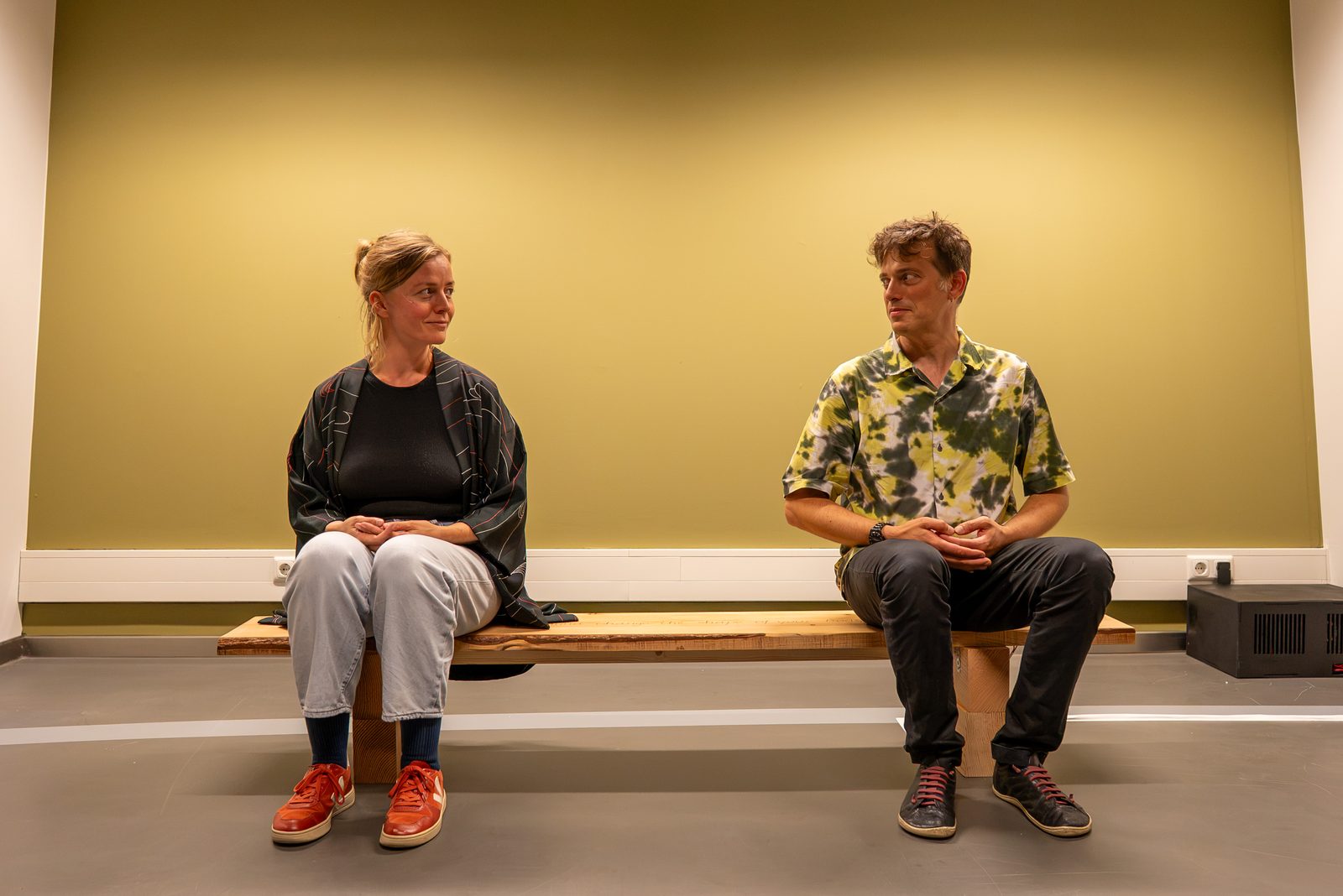
In the Spaces, the Stories

Poppy Flint · 2026

With Alex Park (Bio-fonic Earth), Lex Kosanke (such noise), Benji Bailes (Bailes+Light), Prof. Andy Neal (inspirational research), Prof. John Crawford (Glasgow University)

The most important component of soil is often the space. Water, air, roots, fungi and countless microorganisms move through an intricate network of macro and microscopic pores whose structure determines the health and resilience of the entire ecosystem. Although these hidden spaces make life possible, they remain almost impossible to perceive directly.

Soil Whisperers

Ninette Koning · 2026

Knowledge does not always begin with observation. Sometimes it begins with touch. Soil Whisperers invites visitors into a quiet physical encounter with soil through an interactive sphere, resting on a pedestal, that responds with subtle variations of light and sound.

Evoking the image of our own planet, the sphere becomes a living interface between the human body and the world beneath our feet, transforming a simple gesture into a moment of dialogue. Rather than asking us to observe soil from a distance, the work encourages us to experience it through proximity, curiosity and care.

Soil: foundation of life

What pores do for us. Pores supply oxygen to roots, store and move water, and provide habitat for organisms. When soil pores collapse, water can no longer infiltrate, roots struggle to grow, and soil organisms lose the space they need to thrive.

Every layer has a function. The topsoil is where it happens: where water is filtered, carbon is stored, and food is grown. It is where soil life is.

Why the apple? Soil compares to Earth the way a thin peel compares to an apple’s flesh. The continental Earth’s crust is 40 km thick, while soil is 1–2 m deep on average.

Video still: Soil: foundation of life Play video
50%of a healthy soil is pore space, filled with air and water.
500+ yearsto form just 2 cm of new topsoil.

Urban Soil: hidden strength

The damage goes deep. Every pass of heavy farm machinery across a field presses soil particles together, squeezing out the pore spaces. Roots then grow sideways above the compacted layer instead of downward, leaving crops rooting shallow, drought-prone, and unable to reach nutrients and water below.

Sponge cities. Urban planners are applying the same principle at city scale, letting porous soil and green space absorb rainwater naturally and reducing urban flooding.

Video still: Urban Soil: hidden strength Play video
300 PSIRoots can no longer get through compacted soil.

See

Wonder begins where visibility ends

Underground Nightsky

Lucia Moreno Spiegelberg · 2026

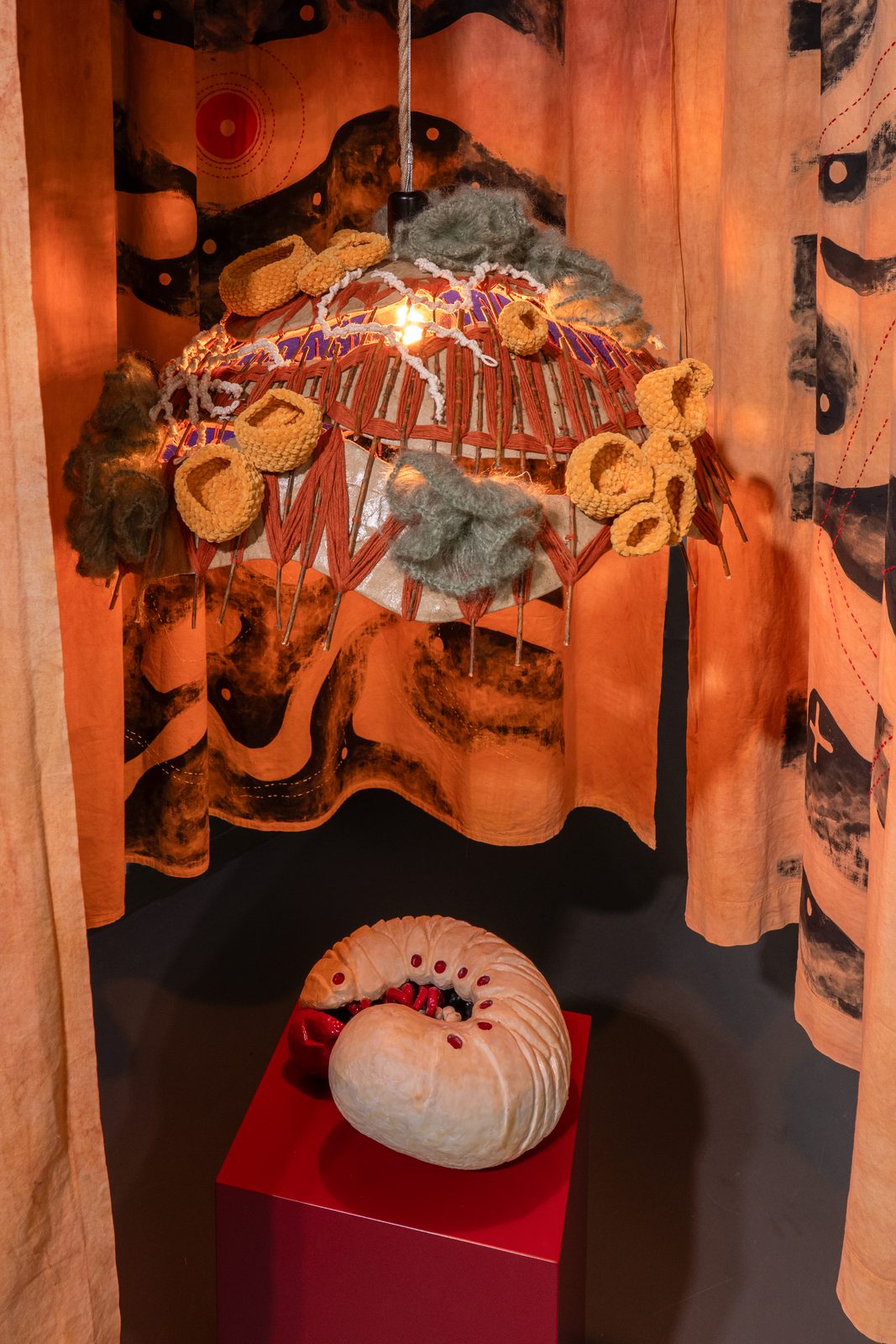
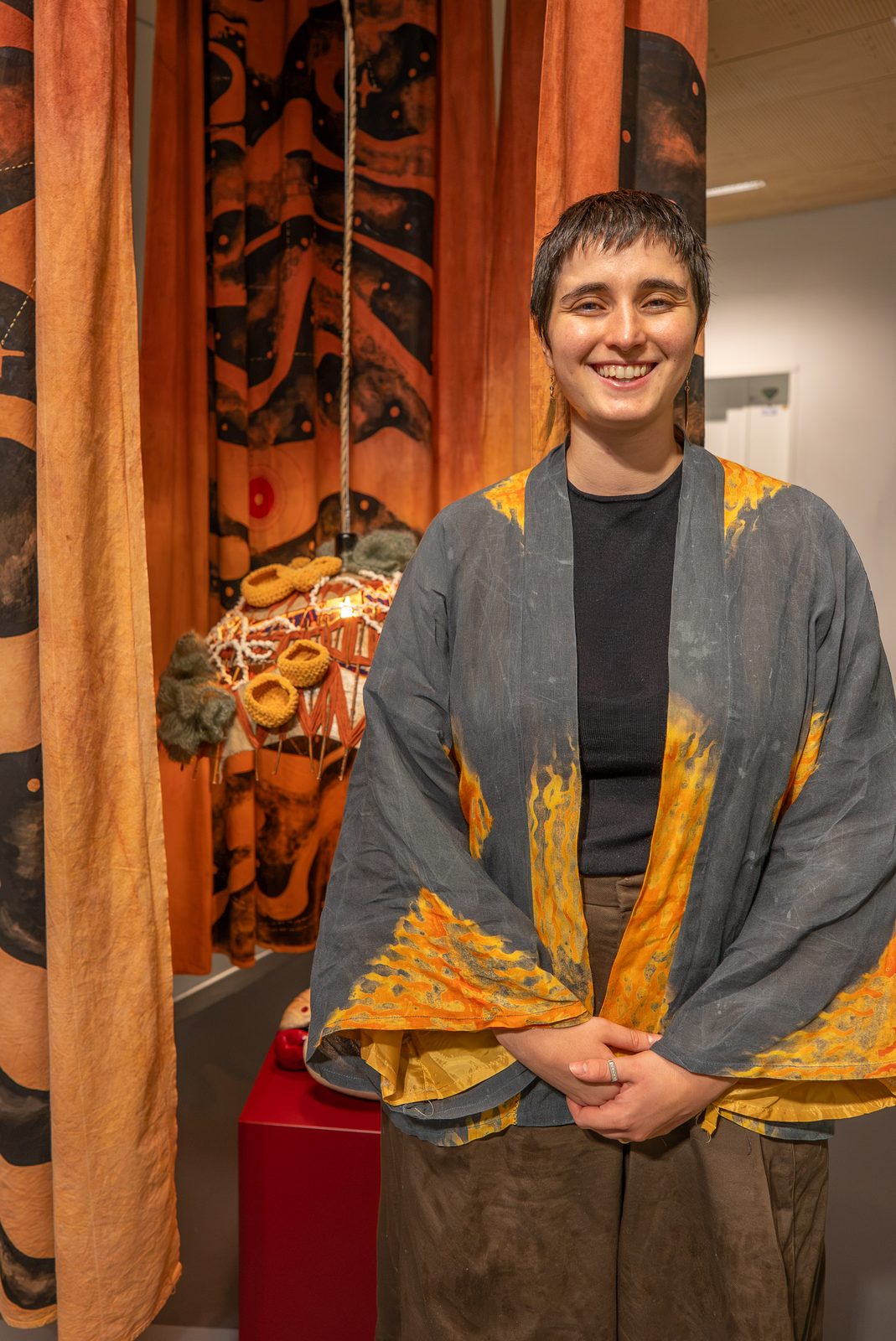
The deeper we look beneath the surface, the closer soil begins to resemble a universe. Underground Nightsky transforms underground ecological processes into a suspended constellation of textiles, clay and light. Inspired by the life cycle of the dung beetle - an essential recycler of organic matter, and by the ancient symbolism of the scarab, associated with renewal and the rising sun in Egyptian mythology, the installation invites visitors to contemplate the hidden complexity of the living world below ground.

It reimagines the underground not as a dark, empty space, but as a dynamic ecosystem shaped by cooperation, exchange and continuous transformation.

If I Were a Nematode

Dario Calderone & Maaike van der Linden (EcoAcoustics) · 2026

Every organism experiences the world differently. Inspired by the sensory universe of the nematode, a microscopic earless organism that moves through the thin films of water surrounding soil particles, If I Were a Nematode invites visitors to temporarily suspend the dominance of vision and encounter the underground through vibration, resonance and bodily perception. Nematodes do not hear but sense vibrations through touch receptors distributed across their entire body, allowing them to detect movements caused by neighbouring organisms, growing roots and shifting soil particles.

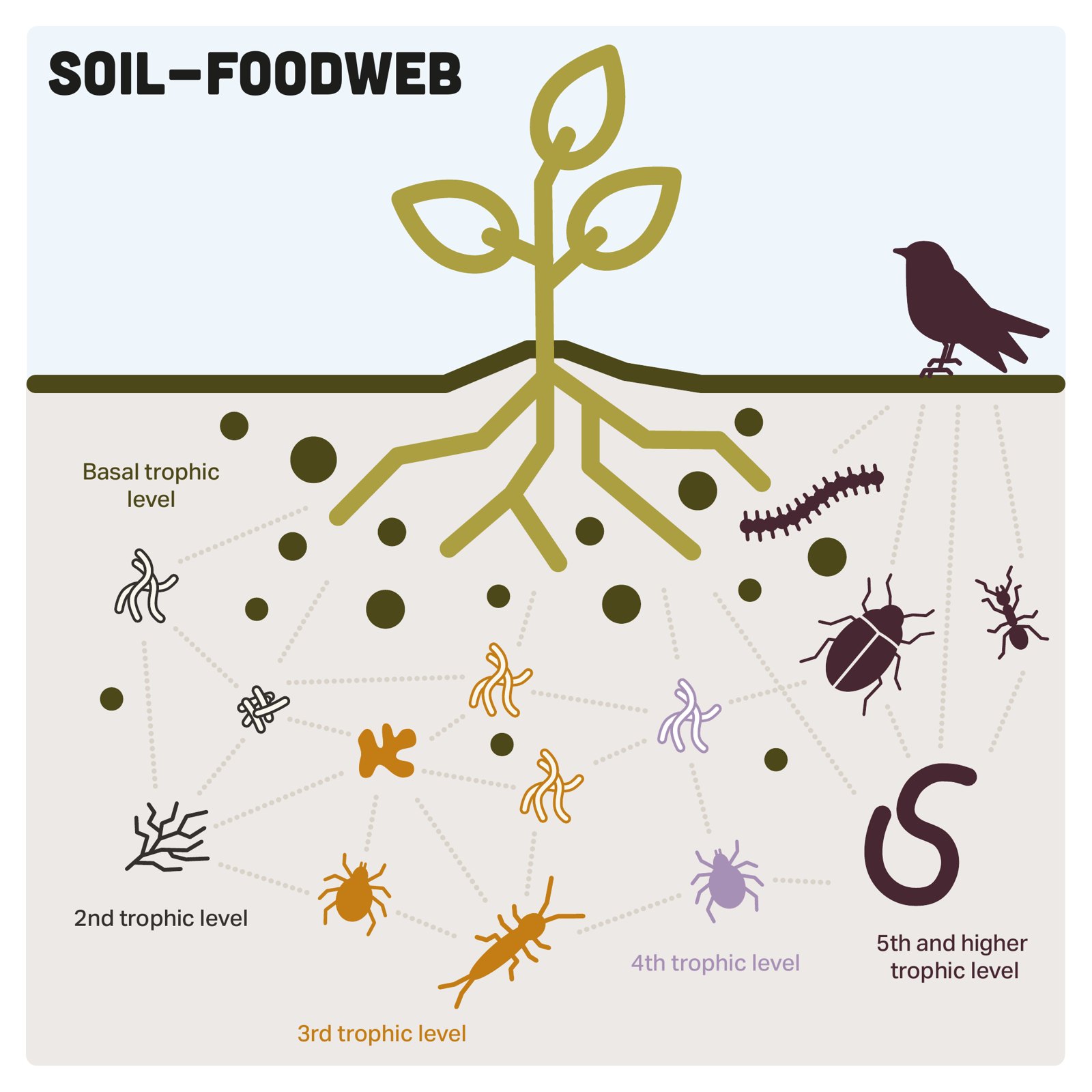
The soil food web

Who eats whom in the soil ecosystem? Bacteria, fungi, and algae break down organic matter into nutrients. Predatory mites and other soil organisms feed on this microfauna, while earthworms primarily process organic matter. In this way, energy and nutrients are recycled.

Illustration of the soil food web: a plant and its roots, with bacteria, fungi, nematodes, mites, springtails, beetles, a centipede, an earthworm and a bird linked across five trophic levels
The soil food web, from the basal trophic level to the 5th and higher trophic levels. Illustration: Robbert Kamphuis
1,000×The strongest dung beetle pulls over 1,000 times its own body weight.

World Soil Museum app

Look through the microscope

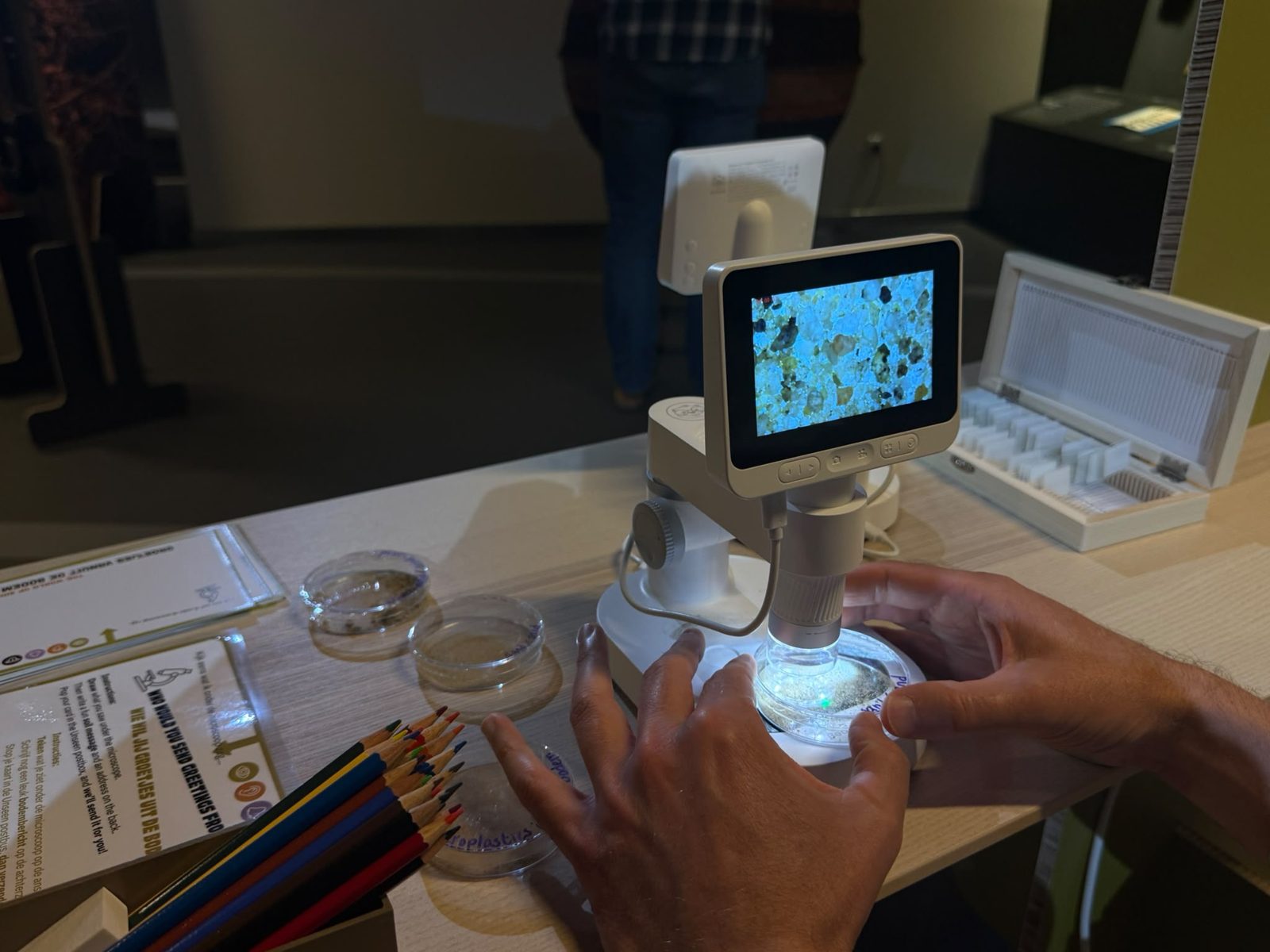
A visitor places a soil sample under the digital microscope at the UNSEEN microscope station; the screen shows magnified sand grains

In the exhibition, a digital microscope shows nematodes, fungal hyphae, protozoa and microplastics in real soil samples, and compares a healthy soil with one polluted by cyanide. Explore the soil food web and how bacteria and nematodes clean up contaminated soil in the app's soil biology theme.

Free ploughingBuried dung stores carbon, feeds plants and carries fewer parasites.
0.2–2 mmThe size of a nematode, living in the thin water film between soil particles.

Behind the exhibition

Awakening Soil Curiosity to Catalyse Soil Literacy

UNSEEN. The World of Soil brings together artworks developed as part of CURIOSOIL, a four-year project co-funded by the European Union. CURIOSOIL has the overarching objective of understanding how to trigger soil curiosity and create connections between people and soil.

The exhibition was created by the World Soil Museum at ISRIC – World Soil Information in Wageningen, together with six artists and the CURIOSOIL partners. It was made to awaken people’s curiosity about soil and to engage all their senses: in the exhibition, visitors can taste, listen, smell, touch and look.

The artists

Taste Museum of Edible Earth Dr. masharu See the artwork Hear Change Factors Marcus Maeder See the artwork Touch In the Spaces, the Stories Poppy Flint See the artwork Touch Soil Whisperers Ninette Koning See the artwork See Underground Nightsky Lucia Moreno Spiegelberg See the artwork See If I Were a Nematode Dario Calderone & Maaike van der Linden (EcoAcoustics) See the artwork

The team

Exhibition curation, art direction & interpretation
Cristina Mosconi
Project lead, exhibition curation science
Stephan Mantel (ISRIC)
Science & education content
Laura Laroche & Neelke Jacobs (ISRIC)
Collection management
Gerline Sonneveld-Treurniet (ISRIC)
Graphic design & production
Robbert Kamphuis
Planning & organisation
Chrow Khurshid & Erika Henskens (ISRIC)
Communication
Silvana Summa (ISRIC) & Cristina Biddlecome (REVOLVE)
Support
Judy Poppe & Brinda van den Berg (ISRIC), Johan Belgraver (ISRIC/WUR) & WUR Facility Services

Visit the exhibition

Where
World Soil Museum, Wageningen
When
1 September 2026 – 28 February 2027
Open
Wednesday to Friday, 13:00–17:00
CURIOSOIL logo: a figure stepping into layered soil, with the words Awakening Soil Curiosity